
Embark on a fascinating journey that reveals Genoa through the music and poetry of its most celebrated artists. This music-inspired itinerary takes you beyond the traditional tourist experience, offering an immersion into the city’s cultural and artistic heritage.
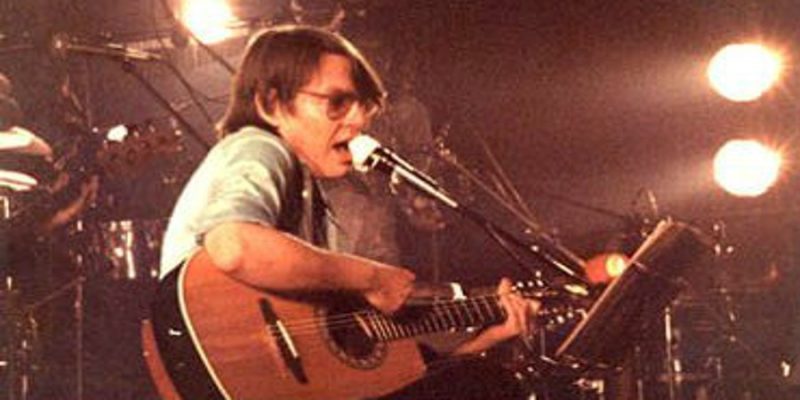
Over the decades, Genoa – often called La Superba for its proud maritime past and historic wealth – has been the birthplace and inspiration for some of Italy’s most influential singer-songwriters. Among them are Fabrizio De André, a poet of the people whose lyrics painted portraits of everyday life and social issues; Luigi Tenco, remembered for his emotional depth and timeless songs; Gino Paoli and Bruno Lauzi, whose melodies became part of Italian popular culture; and Ivano Fossati, known for his lyrical and atmospheric compositions.
This walking tour of Genoa allows you to explore the neighborhoods, piazzas, and waterfronts that shaped the creativity of these artists. You’ll pass through the narrow medieval alleyways of the old town (caruggi), vibrant areas where music, poetry, and daily life have always intertwined. You’ll discover cafés, theaters, and small squares that once hosted the sounds and voices of a cultural movement known as the Genoese School of Song, a movement often compared to French chanson for its poetic style and strong storytelling.
Beyond music, this itinerary reveals the essence of Genoa: its seafaring traditions, its multicultural influences, and its ability to inspire creativity across generations. Visitors will not only learn about the history of Italian music but also experience the city as a living stage, where every corner tells a story.
The tour combines cultural insights with the pleasure of discovering hidden gems: panoramic viewpoints over the Ligurian Sea, historic palaces, colorful street art, and artisan workshops that reflect the same authenticity found in the music of Genoa’s most famous songwriters.
Join this music tour in Genoa and discover the city through its most authentic voice: the songs and stories of the artists who gave rhythm and poetry to the soul of Liguria.
Arrival in Genoa is expected during the day. Check-in at the hotel and free time at your disposal. Dinner on your own and overnight stay.
Breakfast at the hotel, followed by a meeting with our expert guide to begin the itinerary dedicated to Fabrizio De André. The tour starts at the Via del Campo Museum, at number 29, a key location in De André’s Genoa. Once the music shop of his friend Gianni Tassio, it has now been transformed into a museum honoring the singer-songwriter, his friends, and fellow Genoese artists, including Luigi Tenco. The journey continues through the characteristic Quartiere della Maddalena, historically animated by port life and figures that inspired many of De André’s songs. Next, visit Via Roma 51 to enjoy the authentic delights of the historic Romanengo confectionery, mentioned in the famous song Naufragio della London Valour, with a tasting of local specialties and a visit to the historic shop. De André’s story echoes through the porticoes of Sottoripa, where in the 1950s he frequented the Ragno Verde with his friend Paolo Villaggio, referenced in the novel Un destino ridicolo. During his early years, Fabrizio performed at La Borsa di Arlecchino on Via XX Settembre, where, legend has it, he shared the streets with Anna la Gorilla, with whom he reportedly lived for a time. A stop at a bench on the commemorative “Via al mare Fabrizio De André” allows a view of the Old Port of Genoa, evoking the scene of Faber capturing the voices of fishmongers for Creuza de mä. The itinerary would not be complete without the Latteria Igea, at the corner of Via Cecchi and Via Cesarea, remembered by Gino Paoli in one of his songs. It was here that the “Four Friends at the Bar” – Paoli, Fabrizio, Tenco, and lyricist Riccardo Mannerini – gathered, inspiring songs such as Il cantico dei drogati. The final stop is in the Sant’Ilario district, offering exceptional panoramic views of Genoa. Here you can find the old Bocca di Rosa railway station and a book-shaped sculpture featuring an acrostic dedicated to the heroine of one of Faber’s most beloved songs. Genoa comes alive through music and daily life, from the aromas and flavors of the Sottoripa porticoes, historic fry shops, and grocery stores, where one can still taste “A cimma”, the traditional veal and vegetable dish celebrated in one of De André’s dialect songs. Lunch is free. In the evening, dinner on your own and overnight stay at the hotel.
Breakfast at the hotel, followed by a meeting with our expert guide for a tour of Genoa dedicated to the city’s other famous singer-songwriters, whose lives and music are deeply intertwined with this beautiful city. Bruno Lauzi, born in Eritrea but a Genoese by adoption, perhaps more than any other local singer-songwriter, captures the essence of his beloved city. He writes about mysterious and sometimes impossible loves in the carruggi near the port, the scirocco wind, and the streets along the sea. In his 1975 album “Genova per noi”, with the Lanterna prominently on the cover, Lauzi intertwines his musical career with his adopted city. Gino Paoli, from Monfalcone, grew up in the Genoese neighborhood of Pegli, to which he remained deeply attached. He is the author of some of the greatest Italian hits, including “Il cielo in una stanza”, a refined melody with intense poetry describing, as Paoli himself recounts, an encounter with a prostitute in a Genoese bordello. Other famous songs include “Senza fine”, “Sapore di sale”, “Quattro amici”, and “La Gatta”, in which he evokes memories of the picturesque Boccadasse neighborhood without explicitly naming it. Luigi Tenco, born in Alessandria, moved with his family to Genova Nervi at a young age. His most famous songs include “I miei giorni perduti” and “Mi sono innamorato di te”. Tragically, he passed away during the 1967 Sanremo Festival, but his presence is still felt in Boccadasse, which inspired several of his songs and was a frequent meeting place with friends, including Fabrizio De André. A commemorative plaque now marks his connection to the village. In the late afternoon, enjoy an aperitif in the enchanting setting of Boccadasse, seated on the beach with a beer or cocktail in hand, admiring the sea. This is the most famous of Genoa’s historic fishing villages, nestled between Corso Italia and Capo Santa Chiara, characterized by colorful houses, rounded pebbles on the beach, and neatly lined-up boats. Dinner is on your own in the evening, followed by overnight stay at the hotel.
After breakfast at the hotel, meet the guide in the morning to explore the world of Niccolò Paganini, the famous Genoese violinist, guitarist, and composer. The tour begins at the Teatro Falcone, annexed to the Palazzo Reale, where Paganini performed on November 9, 1827, in the presence of King Carlo Felice and his family. Walking up Via Cairoli, the itinerary continues along Via Garibaldi, where inside Palazzo Tursi you will find the Sala Paganiniana, part of the Musei di Strada Nuova. Here is displayed the famous Guarneri del Gesù violin from 1743, which Paganini favored above all his instruments, affectionately calling it “my cannon violin” for the fullness of its sound. The final stop is the Teatro Carlo Felice, where on November 30, 1834, Paganini performed for the first time. Lunch is free. In the afternoon, enjoy free time to discover Genoa at your own pace. For those seeking an evening of great emotion, we recommend attending a concert or opera performance at the magnificent Teatro Carlo Felice, Genoa’s most important 19th-century theater. Dinner is on your own, followed by overnight stay at the hotel.
Breakfast at the hotel, followed by departure for the return journey.
This itinerary is designed for groups with a minimum of 20 participants, but it can also be adapted for smaller groups or arranged as private individual services.